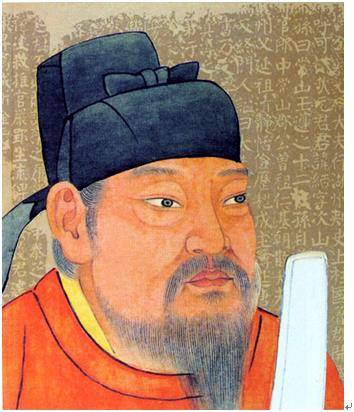
Yan Zhenqing
Introduction
Yan Zhenqing (709-785) was an eminent calligrapher and statesman during the Tang Dynasty (618-907), recognized for his significant contributions to the art of Chinese calligraphy. Celebrated for his distinctive style that embodied power, grace, and moderation, Yan Zhenqing's works have left an indelible mark on the calligraphic traditions of China. His approach harmonized art with the doctrine of moderation, a philosophical principle that he ardently practiced in both his life and his artistic expression. His legacy continues to influence and inspire calligraphers and scholars, making him one of the most revered figures in the history of Chinese art.
Early Life and Education
Yan Zhenqing was born in 709 into a family that highly valued education, which played a pivotal role in shaping his intellectual and cultural upbringing. His family's dedication to learning provided Yan with a solid foundation in classical Chinese education, which later influenced his philosophical and artistic pursuits. Growing up during the Tang Dynasty, a period renowned for its cultural and artistic flourishing, Yan was exposed to various forms of art and scholarship, which enriched his understanding and appreciation of calligraphy.
Yan's early years were marked by a strong commitment to self-cultivation, a principle closely aligned with the doctrine of moderation that he would later champion. This doctrine emphasized virtues such as calmness, wisdom, kindness, and persistence, which Yan embedded into his personal ethos. These formative influences were evident in his calligraphic works, where he sought to integrate the harmony of art and heart, reflecting the balance and unity he pursued in life.
Notable Works
Among Yan Zhenqing's numerous calligraphic masterpieces, the "Eulogy for a Nephew" (Ji zhi Jiming wen gao) stands out as a profound expression of emotional depth and technical mastery. Created during a period of personal loss, this work exemplifies Yan's ability to channel intense emotions through his art, resulting in a piece that is both chaotic and controlled. The work's layout, characterized by varied ink tones and character sizes, showcases Yan's skill in achieving balance and harmony.
Yan's "Eulogy for a Nephew" is often compared to Wang Xizhi's "Preface to the Poems Collected from the Orchid Pavilion," regarded as the first masterpiece of running script. Both works are celebrated for their pioneering contributions to the development of Chinese calligraphy, highlighting the enduring significance of Yan's artistic achievements.
Career and Achievements
Yan Zhenqing's career was distinguished by his dual roles as a calligrapher and a statesman. Serving in the Tang Dynasty court, Yan was known for his noble character and unwavering dedication to his country. His administrative skills and moral integrity were instrumental in reversing the decline of the Tang court, earning him respect and admiration from emperors and officials alike.
In the realm of calligraphy, Yan Zhenqing forged a new path, departing from the established styles of his predecessors such as Wang Xizhi. He developed a monumental, dignified, and powerful calligraphic style characterized by its smoothness, stability, and masculinity. This innovative approach positioned him as a "sole hero" who challenged the conventions of ancient calligraphy, according to the renowned Song Dynasty scholar-poet Su Shi.
Yan's calligraphic works are celebrated for their simplicity, sincerity, and expressive power. His ability to convey profound emotions through his brushwork attracted admiration from contemporaries and successors, solidifying his reputation as a master calligrapher. His style of moderation, reflected in his sophisticated use of ink and layout, demonstrated his mastery of balancing contradictions and achieving harmony within a piece of art.
Influence and Legacy
Yan Zhenqing's influence extends far beyond his lifetime, as his calligraphic style and philosophical principles have continued to inspire generations of artists and scholars. His commitment to the doctrine of moderation imbued his works with a timeless quality, resonating with the ideals of balance and harmony that remain central to Chinese aesthetics.
The impact of Yan's calligraphy is evident in the works of later artists who have adopted and adapted his techniques. His emphasis on structure, rhythm, and proportionality in calligraphy has been studied and emulated by countless calligraphers seeking to capture the essence of his style. Yan's legacy is not only preserved through his surviving works but also through the continued appreciation and study of his contributions to Chinese art.








